
Why Mindsets Matter in Planning
At UnboundEd, we believe equitable instruction begins with intentional planning. The GLEAM Mindsets Planning Guide helps educators translate the principles of Grade-Level, Engaging, Affirming, and Meaningful instruction into daily lesson design.
Use this guide to pause, reflect, and design lessons that not only meet standards but also affirm students’ identities and potential.
What Are GLEAM® Mindsets?
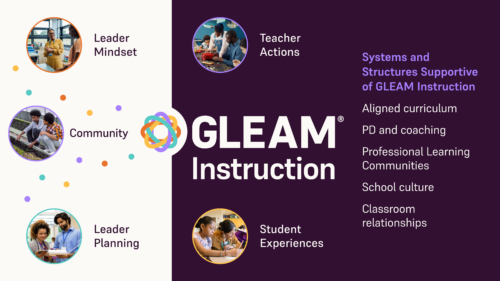
The GLEAM Mindsets represent five beliefs that drive equitable, grade-level teaching. They remind us that planning is more than selecting materials; it’s about preparing spaces where all students can thrive.
| Mindset | What It Means in Practice |
|---|---|
| Grade-Level | Plan lessons that give every student access to the rigor of grade-level content, supported by scaffolds that maintain, not lower, expectations. |
| Engaging | Create experiences that spark curiosity and agency through meaningful tasks and authentic student talk. |
| Affirming | Recognize and leverage the cultural assets students bring to the classroom; representation matters. |
| Meaningful | Connect content to students’ lived experiences and to the world around them. |
| Sustained | Build habits of reflection and continuous improvement to sustain equitable practice over time. |
💡 GLEAM® is more than a framework, it’s a commitment to designing instruction that affirms both identity and intellect.
How to Use This Guide
This planning guide is flexible. You can use it:
-
Individually, as a reflective tool for upcoming lessons.
-
With your team, during collaborative planning or PLC meetings.
-
Across units, to align instruction with long-term learning goals.
Step-by-Step Planning with the GLEAM Mindsets
1. Reflect on Student Access and Expectations
Begin by asking: Are all students being invited into grade-level work?
Review lesson goals and tasks. Identify where expectations might unintentionally narrow and how scaffolds can widen access without diluting rigor.
2. Design for Engagement
Think about what will make this lesson irresistible.
-
Build opportunities for discourse and collaboration.
-
Use texts, problems, or examples that connect to real experiences.
-
Incorporate moments for student choice and voice.
3. Affirm Student Identities
Audit the lesson through an equity lens:
-
Whose stories and perspectives are centered?
-
How can materials better reflect your students’ cultures and languages?
Add inclusive examples and visuals that allow students to see themselves in the content.
4. Make It Meaningful
Clarify the why behind every task.
Help students link the learning to community issues, career paths, or personal growth. When learning matters, persistence increases.
5. Sustain the Work
Plan for reflection, both yours and your students’.
Use exit tickets, peer observation, or self-assessment to track growth over time. Revisit your plans monthly to identify where your mindsets showed up, and where they can grow stronger.
Connect & Continue Learning
Bring your planning to life through UnboundEd’s professional learning experiences.
-
Standards Institute – Deepen your practice with immersive, equity-focused PD.
-
Gleam in the Classroom – See examples of GLEAM in action.
-
Upcoming Events – Join a community of educators leading for equity.
Key Takeaways
-
Equitable instruction starts long before students enter the room; it starts in planning.
-
The GLEAM Mindsets ensure every lesson plan balances rigor, relevance, and representation.
-
Continuous reflection sustains this work and nurtures classrooms where all learners can succeed.
description
Read the blog series

GLEAM® Instruction in the Classroom
Next steps with GLEAM®